Typically around 5–6 hours between coats, although drying times vary depending on temperature and humidity.
Liberon Finishing Oil vs Danish Oil
If you’re deciding between Liberon Finishing Oil and Danish Oil, the right choice depends on the type of project and the level of protection you require. Both products enhance the natural beauty of wood while nourishing the timber, but they are formulated for slightly different purposes.
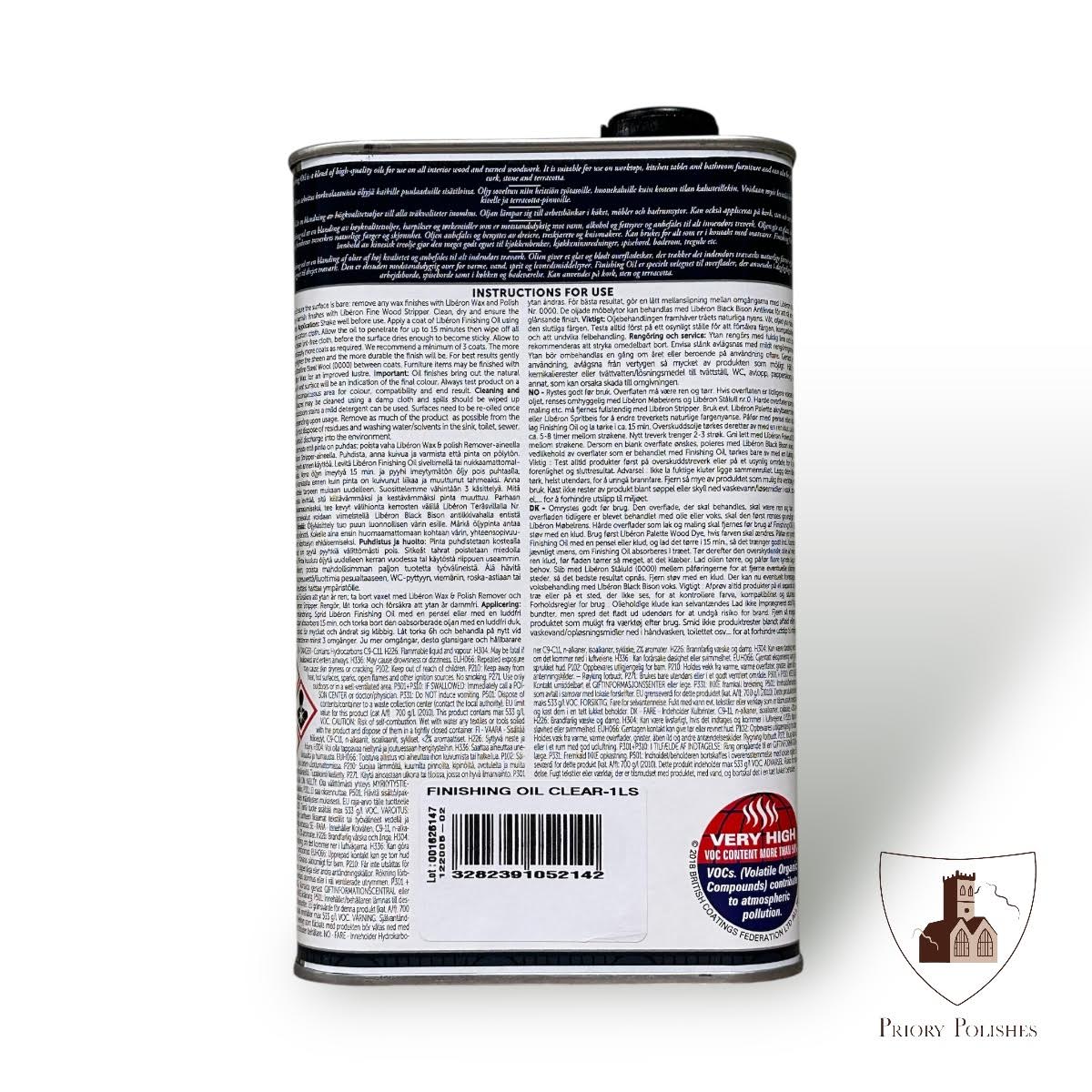
Liberon Finishing Oil is designed to provide a durable, water-resistant finish that is ideal for surfaces exposed to everyday wear. It is particularly well suited to kitchen worktops, dining tables, coffee tables, bathroom furniture and other interior wooden surfaces where protection from moisture, heat and spills is important. With each additional coat, the finish becomes more durable while continuing to enhance the natural grain of the wood.
Danish Oil is a penetrating wood oil that creates a beautiful natural finish with a soft satin sheen. It is a popular choice for furniture, doors, cabinets and interior joinery where a traditional hand-rubbed appearance is preferred. Danish Oil is easy to apply, easy to maintain and helps bring out the natural character of the timber.
Which Should You Choose?
If you need the best possible protection for furniture or worktops that are used every day, Liberon Finishing Oil is the better choice. It offers excellent resistance to water, alcohol and general wear, making it ideal for high-traffic areas of the home.
If you’re looking for a traditional natural finish that is simple to apply and maintain, Danish Oil is an excellent option. It is perfect for decorative furniture, interior woodwork and projects where a classic oiled appearance is desired.
Both products enhance the natural colour and grain of timber, but for kitchen worktops, dining tables and other hard-working wooden surfaces, Liberon Finishing Oil generally provides superior durability and longer-lasting protection.




 Verified owner


