

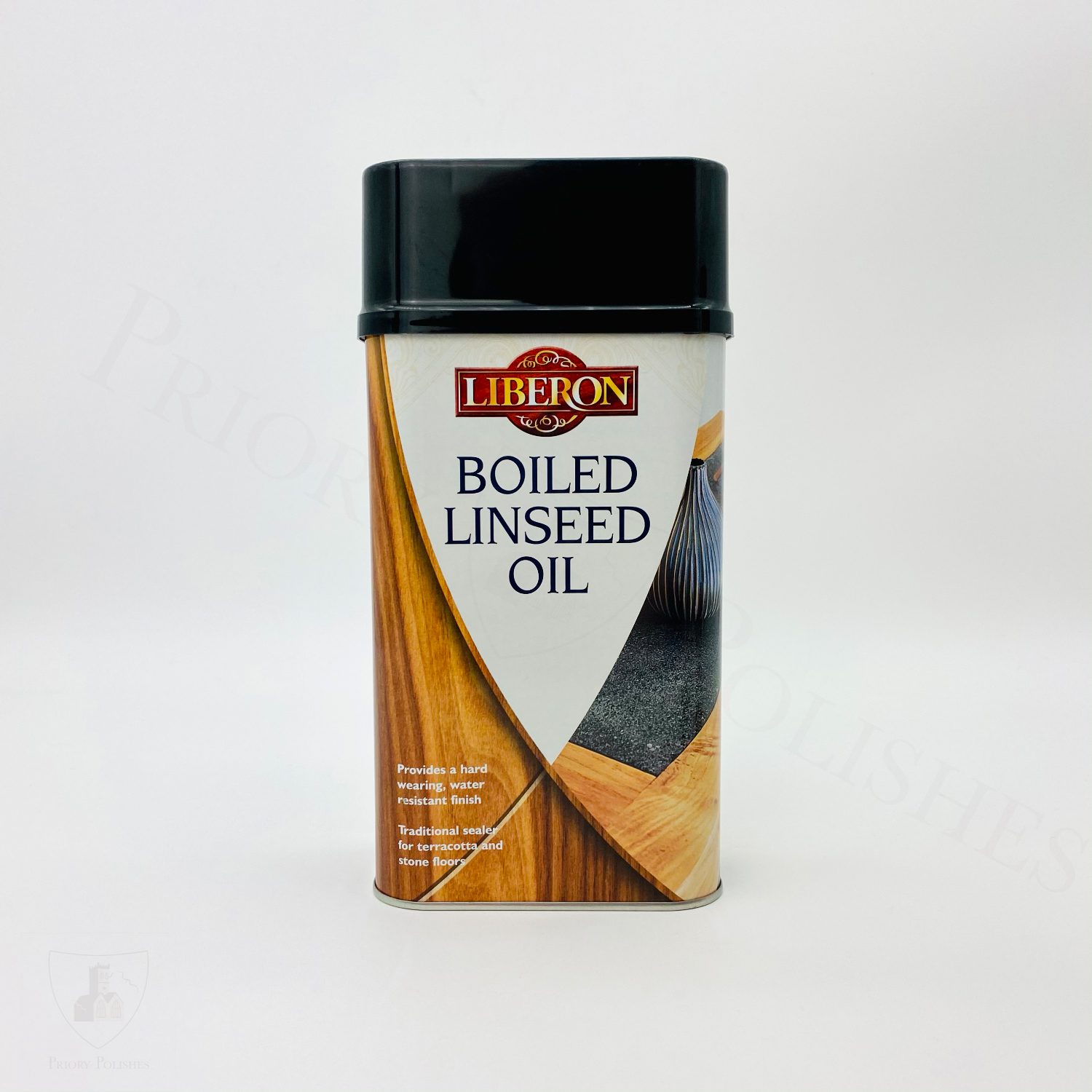
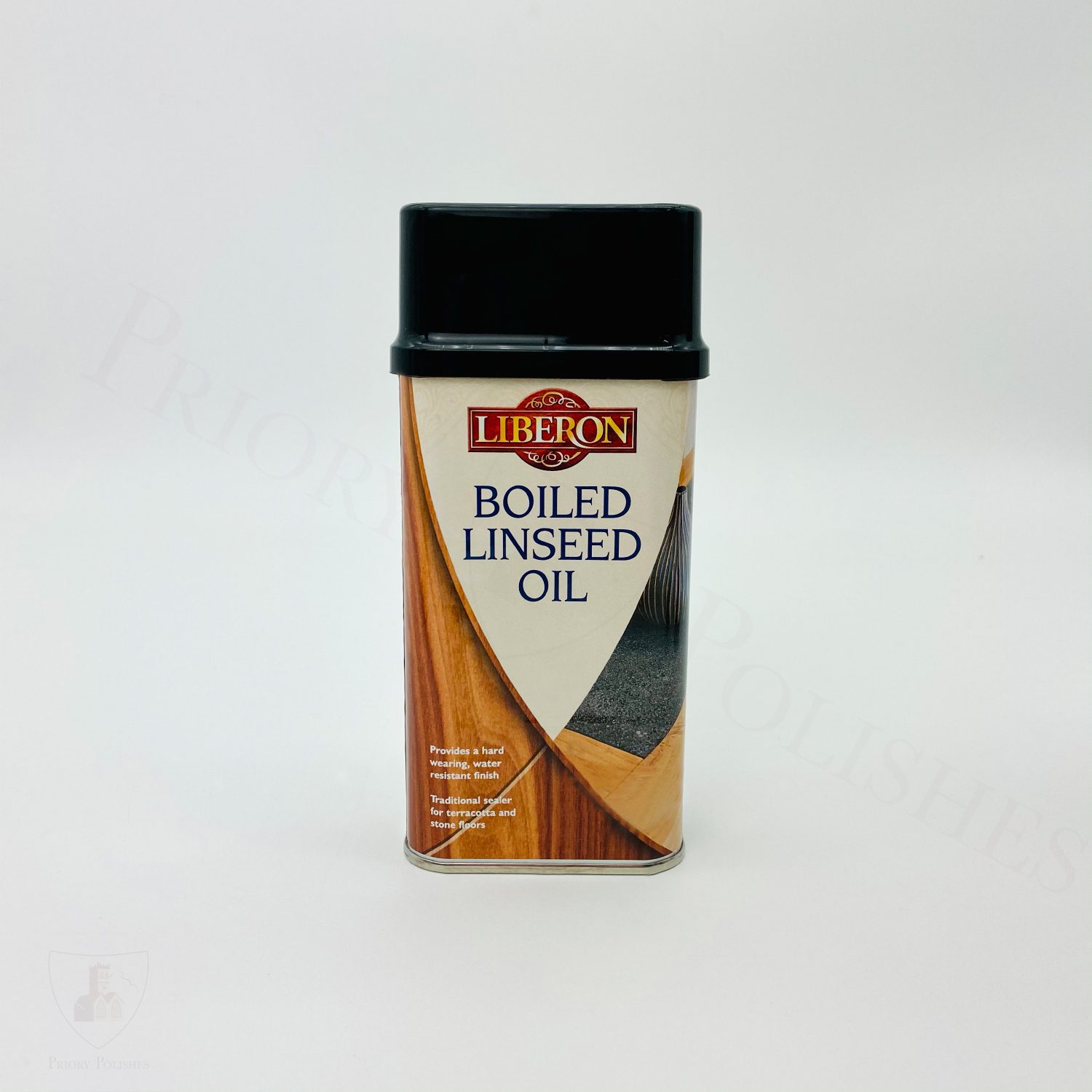
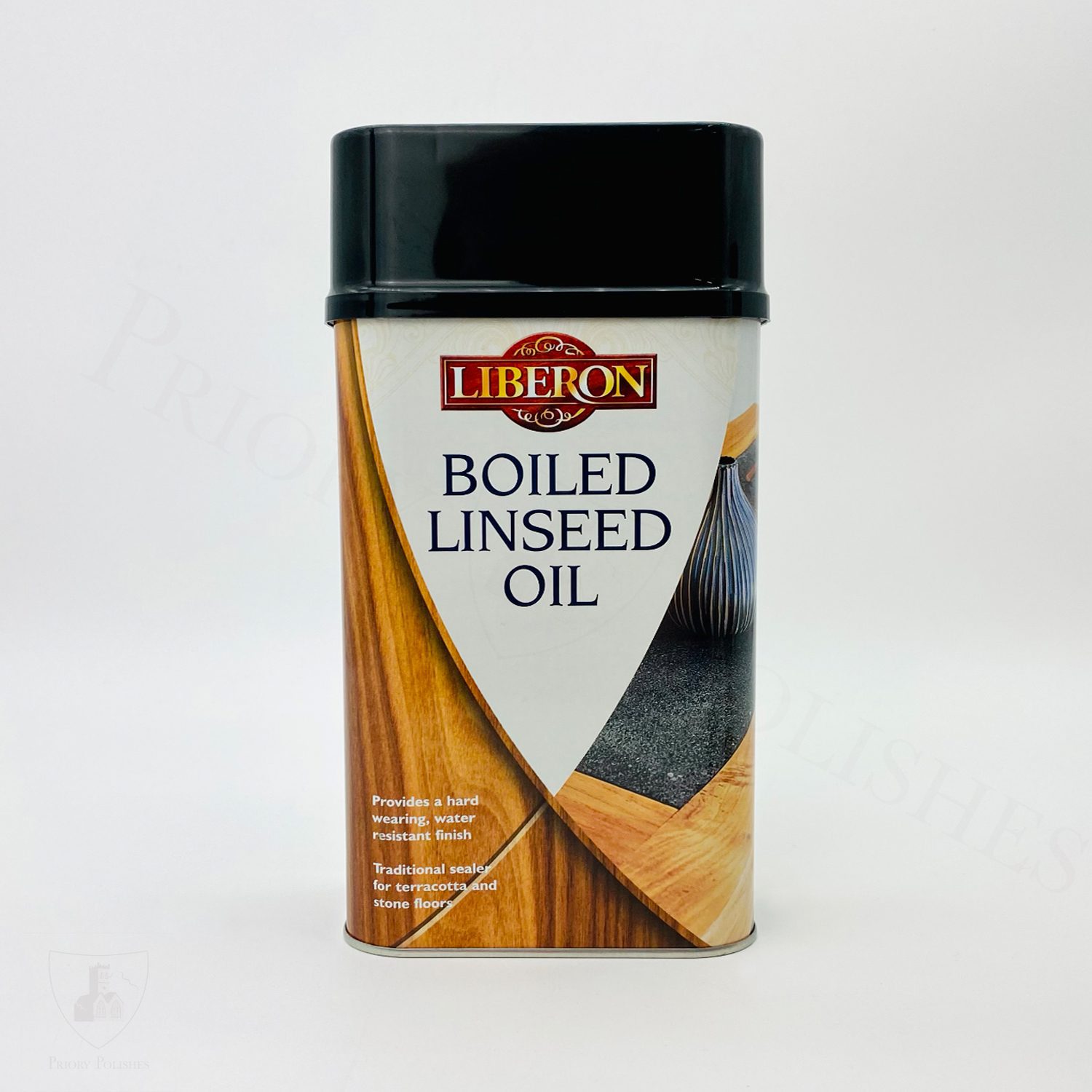
Liberon Boiled Linseed Oil
Price range: £12.95 through £17.95
Liberon Boiled Linseed Oil is a traditional wood finishing oil designed to enhance and protect timber while giving it a mellow, natural-looking finish.
- It is ideal on new or stripped bare interior woods.
- It is a traditional sealer for terracotta tiles, stone floors and other porous surfaces before waxing.
- It is excellent for finishing and maintaining wooden furniture as well as wood floors.
- A superior quality oil with Fast drying times.
- Used as an additive for oil based paints by artists.
Please See Full instructions below
UK FREE delivery on all orders over £24
Description
Liberon Boiled Linseed Oil is a traditional wood finishing oil designed to enhance and protect timber while giving it a mellow, natural-looking finish.
It is similar to traditional raw linseed oil, but has been treated with hot air to improve its drying time. This makes it a practical choice for interior woodwork, furniture and restoration projects where a traditional linseed oil finish is required.
Liberon Boiled Linseed Oil is suitable for most types of wood, except exterior oak. It can also be used as a traditional sealer for terracotta tiles, stone floors and other porous surfaces before waxing.
It is particularly useful for restoring and maintaining wooden furniture, bare timber and wood floors where you want to enhance the natural colour and grain rather than cover the surface with a heavy film finish.
- Why Choose Liberon Boiled Linseed Oil?
- What Can Boiled Linseed Oil Be Used On?
- Boiled Linseed Oil for Furniture
- Boiled Linseed Oil for Bare Wood
- Boiled Linseed Oil for Wood Floors
- Boiled Linseed Oil for Terracotta
- Boiled Linseed Oil for Stone Floors
- Boiled Linseed Oil for Hardwoods and Softwoods
- How to Use Liberon Boiled Linseed Oil
- Coverage and Application
- Frequently Asked Questions
Why Choose Liberon Boiled Linseed Oil?
Liberon Boiled Linseed Oil is a traditional finishing product that remains popular with furniture restorers, woodworkers and DIY users.
- Traditional wood finishing oil
- Provides a mellow, natural-looking finish
- Enhances the natural grain and colour of timber
- Suitable for most types of wood
- Ideal for new or stripped bare wood
- Excellent for wooden furniture
- Suitable for wood floors
- Can be used on terracotta
- Suitable as a sealer for porous stone
- Traditional hard-wearing finish
- Faster drying than traditional raw linseed oil
- Useful for antique restoration
- Can be used as an additive for oil-based paints
What Can Boiled Linseed Oil Be Used On?
Liberon Boiled Linseed Oil has a wide range of traditional uses in furniture restoration, woodworking and interior finishing.
- New bare wood
- Stripped furniture
- Wooden furniture
- Tables
- Cabinets
- Solid Wood Doors
- Wood floors
- Interior woodwork
- Terracotta tiles
- Porous stone
- Stone floors
- Other absorbent surfaces suitable for oil finishing
Always test the product first on a spare piece of material or an inconspicuous area to check compatibility, colour and the final result.
Boiled Linseed Oil for Furniture
Liberon Boiled Linseed Oil is ideal for wooden furniture that has been stripped back to bare timber.
It penetrates into the wood and enhances the natural colour and grain, creating a mellow traditional appearance.
It can be used on suitable tables, cabinets, doors, chairs and other interior wooden furniture.
Boiled Linseed Oil is particularly useful in restoration work where you want to retain the natural character of the timber rather than applying a modern film-forming finish.
Always establish what finish is currently on an antique before stripping it. Valuable or historically important furniture may require a different restoration approach.
Boiled Linseed Oil for Bare Wood
Boiled Linseed Oil is designed for use on clean, dry bare wood.
It is particularly suitable for new timber or wood that has been stripped of its previous finish.
The oil enhances the natural appearance of the timber and can produce a warm, mellow appearance as it penetrates the grain.
Oil finishes can alter the colour of timber, so always test the product first. A wet area of bare wood gives a useful indication of the likely colour once oiled.
Boiled Linseed Oil for Wood Floors
Liberon Boiled Linseed Oil can be used for suitable wood floors where a traditional oil finish is required.
Because floors receive considerable wear, preparation and application are particularly important. The timber should be clean, dry and free from previous finishes before oiling.
Apply thin coats and remove all excess oil. Allow sufficient drying time between coats and allow the final coat to harden fully before returning the floor to normal use.
For a more robust finish on a wooden floor, we also offer a good selection of Hard Wax Oils.
Boiled Linseed Oil for Terracotta
Liberon Boiled Linseed Oil can be used as a traditional sealer for terracotta tiles.
It can help prepare porous terracotta surfaces before applying a suitable wax finish.
The terracotta should be clean, dry and free from previous incompatible treatments before application.
Always test first because porous terracotta can vary considerably in absorbency and colour.
Boiled Linseed Oil for Stone Floors
Liberon Boiled Linseed Oil can also be used as a traditional sealer for suitable porous stone floors before waxing.
It is particularly suited to absorbent surfaces where the oil can penetrate the material.
Always test first on a small area because the oil can deepen and enhance the natural colour of porous stone.
Boiled Linseed Oil for Hardwoods and Softwoods
Liberon Boiled Linseed Oil is suitable for most types of wood, including many hardwoods and softwoods.
However, it should not be used on exterior oak. For exterior oak, We recommend Liberon Pure Tung Oil instead.
Different species of timber absorb oil at different rates, so always test the product before treating a complete surface.
How to Use Liberon Boiled Linseed Oil
- Good preparation is essential when using Liberon Boiled Linseed Oil.
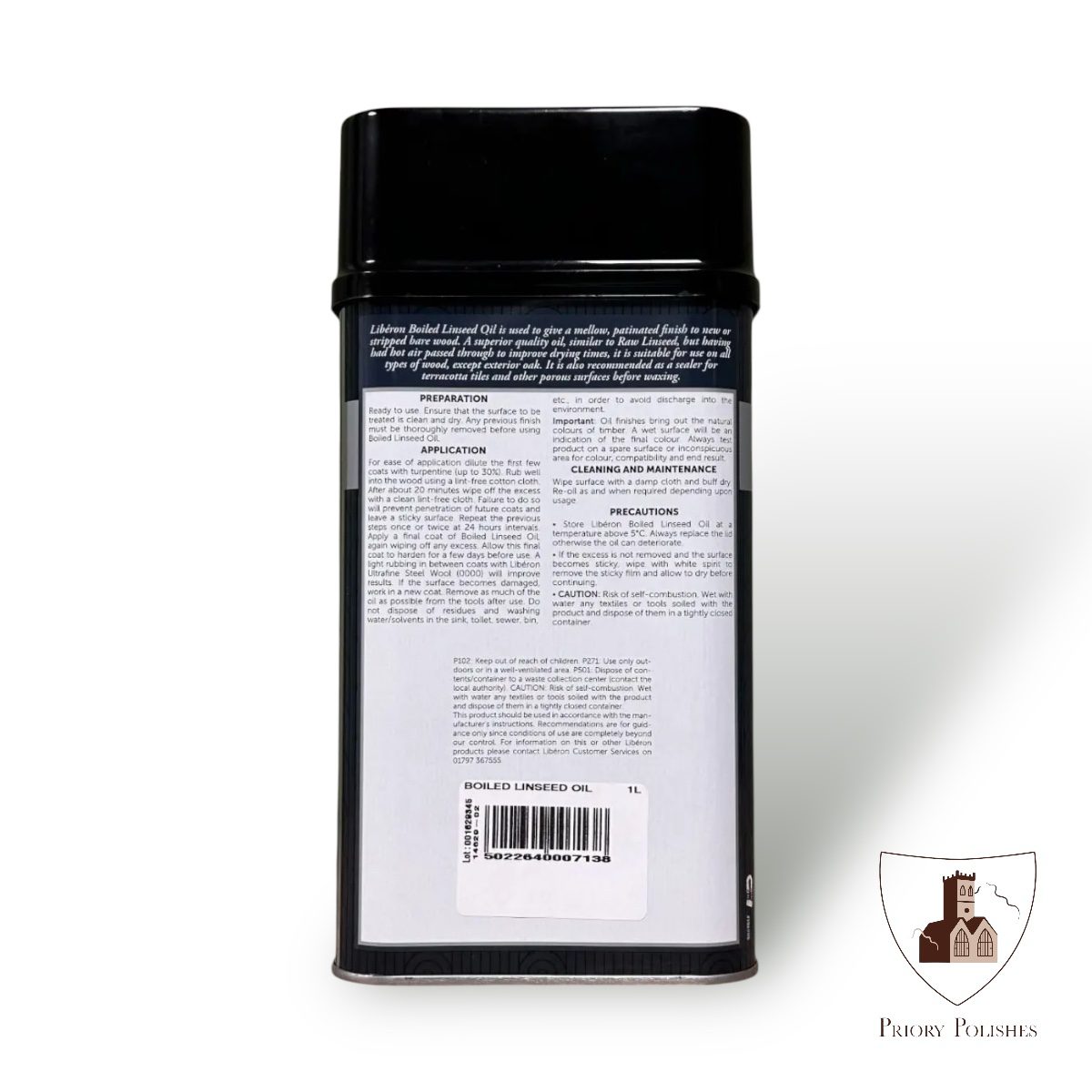
- The surface must be clean and dry, and any previous finish must be thoroughly removed before applying the oil.
- Existing wax can be removed using a suitable wax and polish remover. Existing varnish or other film finishes may need to be stripped before the oil can penetrate the timber.
- Once stripped, sand the timber appropriately and remove all dust before applying the oil.
- For antique furniture, always consider the original finish and construction before carrying out extensive stripping or refinishing.
- For the first few coats, dilute the Boiled Linseed Oil with up to 30% turpentine if required.
- Rub the oil well into the timber using a lint-free cotton cloth.
- Work in the direction of the wood grain.
- After approximately 20–30 minutes, wipe away all excess oil with a clean lint-free cloth.
- Allow the coat to dry for approximately 24 hours.
- Lightly rub between coats using Ultra Fine Steel Wool Grade 0000 if required.
- Repeat for one or two additional coats.
- Apply the final coat of Boiled Linseed Oil undiluted.
- Wipe away all excess oil.
- Allow the final coat to harden for several days before heavy use.
Maintaining a Boiled Linseed Oil Finish
Once the finish has cured, maintenance is straightforward.
Wipe the surface with a damp cloth and buff dry. Re-oil as required depending on the amount of use and wear the surface receives.
Before applying another coat, make sure the surface is clean and dry.
For furniture and other frequently used items, regular light maintenance is preferable to allowing the timber to become excessively dry before re-oiling.
Why You Must Wipe Off Excess Oil
Always wipe away excess Boiled Linseed Oil.
Oil that remains sitting on the surface can form a sticky film rather than penetrating into the timber.
It can also prevent later coats from penetrating properly.
If the surface does become sticky because excess oil has been left behind, we recommend wiping the surface with White Spirit to remove the sticky film, then allowing the surface to dry fully before continuing.
Coverage and Application
Coverage: Approximately 10–12m² per litre, so actual coverage will depend on the absorbency and condition of the surface.
Drying time: approximately 24 hours between coats.
Application: Brush or lint-free cloth.
Tool cleaning: White Spirit.
Frequently Asked Questions
What is Liberon Boiled Linseed Oil used for?
Liberon Boiled Linseed Oil is used to finish and maintain wood, enhance the natural grain and provide a traditional mellow finish. It can also be used as a sealer for suitable terracotta and porous stone before waxing.
How Many Coats of Boiled Linseed Oil should i apply?
For most applications, apply several thin coats rather than one heavy coat. The first few coats can be diluted with up to 30% turpentine. Allow approximately 24 hours between coats. After one or two diluted coats, apply a final coat of undiluted Boiled Linseed Oil. The exact number of coats required depends on the absorbency of the timber and the level of protection and finish required.
What is the Drying Time?
Liberon Boiled Linseed Oil has a drying time of approximately 24 hours between coats. The final coat should be allowed to harden for several days before the surface is put into heavy use. Drying times can vary depending on temperature, ventilation, humidity, timber absorbency and the amount of oil applied.Always ensure the area is well ventilated during and after application.
What is the difference between Boiled Linseed Oil and Raw Linseed Oil?
Boiled Linseed Oil and Raw Linseed Oil are traditional wood oils, but they differ mainly in drying time. Raw Linseed Oil dries much more slowly, while Boiled Linseed Oil has been treated with hot air to improve its drying time. This makes Boiled Linseed Oil particularly useful for interior furniture and woodwork where a quicker drying traditional oil finish is preferred.
Should i use Boiled Linseed Oil or Danish Oil?
Boiled Linseed Oil is a traditional linseed-based oil that provides a mellow, natural finish and is particularly popular for furniture restoration and traditional wood finishing. Liberon Superior Danish Oil is a blend containing Tung Oil and natural oils and is designed for both interior and exterior woodwork. If you are looking for a traditional linseed oil finish, Boiled Linseed Oil is the appropriate choice. If you require a more versatile oil for interior and exterior timber, Danish Oil may be more suitable.
Can Boiled Linseed Oil Be Used on Exterior Oak?
No. Liberon Boiled Linseed Oil should not be used on exterior oak. Boiled Linseed Oil is suitable for most wood types but should not be used on exterior oak. Liberon Pure Tung Oil is a different type of traditional penetrating oil and is particularly recommended by Liberon for exterior oak. For exterior oak, choose Liberon Pure Tung Oil rather than Boiled Linseed Oil. This is important because oak contains natural substances that can interact with certain oils and contribute to darkening or blackening of the timber when exposed outdoors.
Can you use Boiled Linseed Oil for Oil-Based Paints?
Boiled Linseed Oil is also traditionally used as an additive for oil-based paints by artists. It can be useful in traditional painting applications where linseed oil is required as part of the finishing or paint medium. Always follow the instructions for the particular paint or medium being used and ensure suitable ventilation.
Can Liberon Boiled Linseed Oil be used on furniture?
Yes. It is ideal for suitable wooden furniture, particularly new or stripped bare timber.
Can I use Boiled Linseed Oil on bare wood?
Yes. The surface should be clean, dry and free from any previous finish before application.
Can Liberon Boiled Linseed Oil be used on wood floors?
Yes. It can be used on suitable wood floors as a traditional oil finish. Allow the final coat to harden fully before returning the floor to heavy use.
Can Liberon Boiled Linseed Oil be used on terracotta?
Yes. It can be used as a traditional sealer for terracotta tiles and other porous surfaces before waxing.
Can Boiled Linseed Oil be used on stone?
Yes. It can be used as a traditional sealer for suitable porous stone surfaces and stone floors before waxing.
Can Boiled Linseed Oil be used outdoors?
Liberon Boiled Linseed Oil is intended primarily for interior applications and should not be used on exterior oak. For exterior wood projects, choose an oil specifically recommended for exterior use, such as Liberon Superior Danish Oil where appropriate.
Can Boiled Linseed Oil be used on pine?
Yes. It is suitable for most types of wood, including suitable softwoods such as pine.
Does Boiled Linseed Oil darken wood?
Yes. Oil finishes enhance the natural colour of timber and can make wood appear richer and darker. Always test on a spare piece or inconspicuous area first.
How do I apply Liberon Boiled Linseed Oil?
Apply it with a lint-free cotton cloth, working in the direction of the grain. For the first few coats, it can be diluted with up to 30% turpentine. Rub it into the wood, then wipe away excess after approximately 20–30 minutes.
How long should I leave Boiled Linseed Oil between coats?
Allow approximately 24 hours between coats, depending on conditions and the absorbency of the timber.
Why do I need to wipe off excess Boiled Linseed Oil?
Excess oil left on the surface can create a sticky film and prevent later coats from penetrating properly. Always wipe away excess with a clean lint-free cloth.
What should I do if Boiled Linseed Oil becomes sticky?
If excess oil has been left on the surface and it becomes sticky, wipe the surface with White Spirit to remove the sticky film. Allow it to dry fully before continuing.
Can I use steel wool between coats?
Yes. you can lightly rub between coats with Ultra Fine Steel Wool Grade 0000 to improve the final result.
How do I clean tools after using Boiled Linseed Oil?
Clean suitable tools with White Spirit.
Can Boiled Linseed Oil be used as a floor sealer?
Yes. It can be used as a traditional sealer for suitable terracotta and porous stone floors before waxing, and it can also be used for suitable wood floors.
Can Boiled Linseed Oil be used under wax?
Yes. It is traditionally used as a sealer for porous surfaces such as terracotta and stone before waxing.
Can Boiled Linseed Oil be used by artists?
Yes. It is also used as an additive for oil-based paints by artists.
Is Liberon Boiled Linseed Oil suitable for antique restoration?
Yes. It is a traditional finishing oil that can be useful for suitable furniture restoration projects, particularly where bare timber needs to be nourished and given a mellow finish.
Can I use Boiled Linseed Oil over wax?
No. Existing wax should be thoroughly removed before applying Boiled Linseed Oil because the oil needs to penetrate the timber.
Can I use Boiled Linseed Oil over varnish?
No. Existing varnish or other previous finishes should be thoroughly removed before applying Boiled Linseed Oil.
How do I maintain a Boiled Linseed Oil finish?
Wipe the surface with a damp cloth and buff dry. Re-oil as and when required depending on usage.
Where can I buy Liberon Boiled Linseed Oil?
Priory Polishes supplies Liberon Boiled Linseed Oil for furniture restoration, woodworking and traditional finishing projects.
Please note
To get an indication of how the wood will look once oiled, test a similar piece of wood or discrete area by applying a wet cloth to the bare wood.
To maintain, wipe the surface with a damp cloth and buff dry. Re-oil as and when required, depending upon usage.
Each 1 Litre covers approximately 10–12m² per litre
Clean tools with White Spirit.
Store Liberon Boiled Linseed Oil in temperatures above 5°C. Always replace the lid when not in use. Oily cloths can self-combust so do not leave impregnated cloths in bundles. Before discarding the cloths lay them flat outside to dry to avoid a fire hazard. If the excess is not removed and the surface becomes sticky, wipe with white spirit to remove the sticky film and allow drying fully before continuing.
Safety Data Sheets
Additional information
| Weight | N/A |
|---|---|
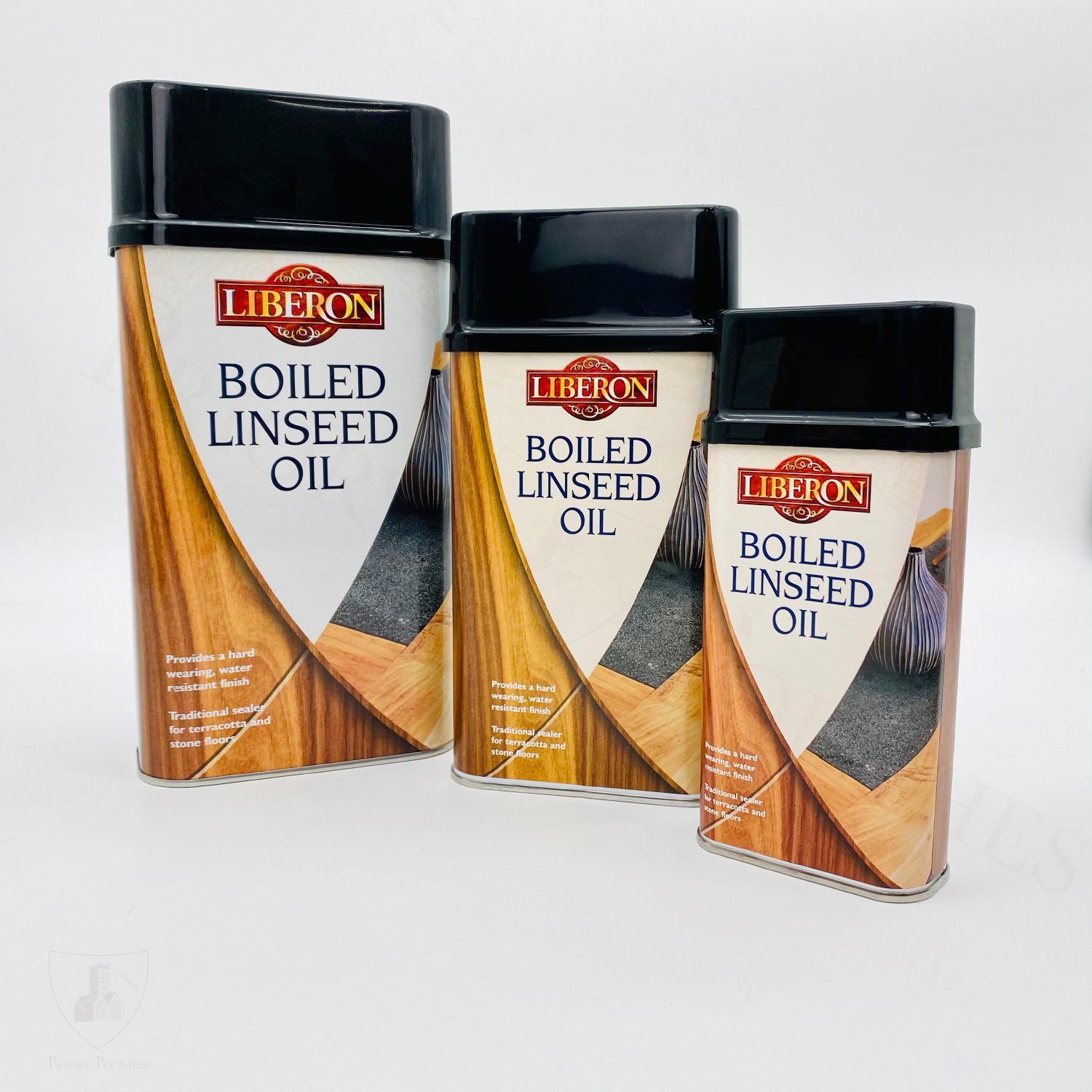
| Size | 250ml, 500ml, 1 Litre |
2 reviews for Liberon Boiled Linseed Oil
You may also like…
-

Liberon Superior Danish Oil
Price range: £10.95 through £36.99 Select options This product has multiple variants. The options may be chosen on the product page -
Liberon Finishing Oil – For a Water Resistant Finish.
Price range: £10.69 through £19.99 Select options This product has multiple variants. The options may be chosen on the product page -
Liberon Pure Tung Oil – Natural Wood Oil for Interior & Exterior Use
Price range: £11.95 through £23.95 Select options This product has multiple variants. The options may be chosen on the product page -
Liberon Teak Oil with UV Filter
Price range: £10.95 through £17.95 Select options This product has multiple variants. The options may be chosen on the product page


Related products
-
Priory Polishes Shellac French Polish – 1 Litre
£29.99 Add to basket -
Liberon Liming Wax – For a Whitewash Effect
Price range: £13.95 through £19.99 Select options This product has multiple variants. The options may be chosen on the product page -
Rustins Ring Remover – 125ml – For Ring, Water & Heat Marks
£6.99 Add to basket


Andy P. (verified owner) –
Worked well (although never used boiled linseed oil before). NB follow safety instructions to avoid fire.
William Fox (verified owner) –