

Lead and Pewter Antiquing Fluid – 150ml
£18.50
Priory Polishes Lead and Pewter Antiquing Fluid Produces a grey / black coating on Lead, Lead Free Pewter, Silver & Tin.
- Creates a grey / black colour
- Ideal for ageing new lead when doing glass work
- Used for ageing Pewter to give it an antique look
- Apply a coat of Protective Priory Polishes Jade Oil to remove any remaining moisture and to fix the colour
See full instructions below
UK FREE delivery on all orders over £24
33 in stock
Description
Priory Polishes Lead and Pewter Antiquing Fluid is a specialist metal antiquing treatment designed to create a grey to black antique patina on lead, lead-free pewter, silver and tin.
It is particularly useful for ageing new lead when carrying out glass work, helping new lead achieve a more traditional aged appearance. It can also be used to give suitable pewter items an attractive antique finish.
The antiquing fluid can be diluted with water for immersion treatment or applied directly when a stronger and darker reaction is required. Treatment times can be adjusted according to the metal, preparation and desired colour.
Once the desired colour has been achieved, the item should be rinsed thoroughly, dried completely and protected with a suitable finish such as Priory Polishes Jade Oil or a compatible wax.
Why use Lead and Pewter Antiquing Fluid?
- Creates a grey to black antique patina.
- Designed for lead and lead-free pewter.
- Can also be used on suitable silver and tin.
- Ideal for ageing new lead used in glass work.
- Useful for giving new pewter an aged appearance.
- Can be diluted for immersion treatment.
- Can be applied directly for a stronger reaction.
- Suitable for controlled antique finishing and restoration work.
- 150ml bottle.
How to use Lead and Pewter Antiquing Fluid
Good surface preparation is essential when using an antiquing fluid. Grease, oil, fingerprints and existing coatings can interfere with the reaction and result in an uneven finish.
- Remove any existing metal lacquer or previous finish using a suitable paint stripper or finish remover.
- Thoroughly clean the surface to remove grease, oil and fingerprints.
- Wipe the metal completely dry.
- Do not touch the prepared surface with bare hands before treatment, as skin oils can affect the final colour.
- For an immersion treatment, dilute the antiquing fluid with 10 parts water.
- Fully immerse the prepared item, or apply the fluid directly from the bottle where appropriate.
- Allow the treatment to react for approximately 1–10 minutes at room temperature, depending on the metal and desired finish.
- Monitor the colour during treatment and remove the item when the desired appearance has been achieved.
- Rinse thoroughly with clean running water.
- Allow the item to dry completely.
- Apply a coat of Priory Polishes Jade Oil to remove any remaining moisture and help fix and protect the colour.
- Alternatively, a suitable Priory Polishes wax finish can be applied.
- We also offer Antiquing Patination Fluid in a Brown or Black for Brass Copper, or Bronze.
Always test the product first on a spare piece of the same material or on an inconspicuous area. Different metals, surface conditions and preparation methods can produce different results.
Ageing new lead for glass work
Lead used in traditional and decorative glass work can initially look bright and new. Lead and Pewter Antiquing Fluid can be used to give suitable new lead a darker, more aged appearance that is better suited to restoration and traditional-style work.
Proper preparation is particularly important when treating lead. Remove any existing coating, grease, oil or fingerprints before applying the antiquing treatment.
The solution can be diluted with water for immersion treatment where an even colour is required. The colour should be monitored during treatment, as the reaction can develop relatively quickly.
Once the desired colour has been achieved, rinse the lead thoroughly, dry it completely and apply a suitable protective finish.
Ageing pewter
New pewter can have a relatively bright and uniform appearance. Antiquing it can help reproduce the darker, more characterful appearance associated with older pewter objects.
Lead and Pewter Antiquing Fluid can be used on suitable lead-free pewter to produce a grey to black antique appearance.
For an even finish, make sure the pewter is thoroughly clean and free from grease before treatment. Immersion in a diluted solution can be useful where the whole item needs to be treated consistently.
Always test first because the final shade depends on the condition and composition of the pewter as well as the treatment time.
Achieving an even antique finish
The quality of the final patina depends heavily on preparation. Any remaining grease, oil, fingerprints or previous coating can prevent the antiquing fluid from reacting evenly.
For a consistent finish:
- Remove existing lacquer or coatings.
- Clean away all grease and oil.
- Make sure the surface is completely dry before treatment.
- Avoid touching the prepared surface with bare hands.
- Use a diluted solution for immersion when an even colour is required.
- Monitor the colour rather than relying solely on treatment time.
- Rinse thoroughly as soon as the desired colour is achieved.
- Dry the metal completely before applying a protective finish.
A protective coating such as Jade Oil or a suitable wax can then be used to help protect the newly created patina.
Important information before use
Always test the product before treating the finished item. Use a spare piece of the same material where possible, or test an inconspicuous area first.
The final colour can vary according to the type and condition of the metal, previous finishes, surface preparation, dilution and treatment time.
Do not touch freshly prepared metal with bare hands before treatment. Fingerprints and perspiration can affect the final result.
This product contains silver nitrate and should be handled with appropriate care. Avoid contact with the eyes and skin and follow the safety information supplied with the product.
If the product gets into the eyes, rinse cautiously with water for several minutes. Remove contact lenses if present and easy to do, then continue rinsing. If swallowed, rinse the mouth and do not induce vomiting. Seek medical advice immediately.
Store in a cool, dry area and keep the container securely closed when not in use.
Frequently Asked Questions
What is Lead and Pewter Antiquing Fluid used for?
It is used to create a grey to black antique patina on suitable lead, lead-free pewter, silver and tin. It is particularly useful for ageing new lead used in glass work and for giving pewter an aged appearance.
Can I use this to age new lead?
Yes. The product is specifically intended for ageing new lead and is particularly useful when working with lead used in glass work.
Can I use it on pewter?
Yes. It can be used on suitable lead-free pewter to create a grey to black antique appearance.
What colour does Lead and Pewter Antiquing Fluid produce?
The treatment produces a grey to black coating or patina. The exact shade depends on the metal, its preparation, the dilution and the treatment time.
Can it be used on silver?
The product can be used on suitable silver, but always test first on a spare or inconspicuous area because the final result will depend on the particular silver surface and desired finish.
Can it be used on tin?
Yes. Tin is one of the metals for which the product is intended, although testing first is always recommended.
How do I dilute Lead and Pewter Antiquing Fluid?
For immersion treatment, dilute the antiquing fluid with up to 10 parts water. The solution can then be used to immerse suitable prepared metal items.
Can I apply the fluid directly?
Yes. The product can be applied directly from the bottle where a stronger reaction is required. Always test first and monitor the colour during treatment.
How long should I leave the metal in the solution?
The recommended treatment time is approximately 1–10 minutes at room temperature. The actual time required depends on the metal, surface preparation and desired colour, so monitor the result during treatment.
Why is surface preparation important?
Grease, oil, fingerprints and old coatings can interfere with the chemical reaction and produce an uneven or inconsistent patina. The metal should be thoroughly cleaned and dry before treatment.
Can I touch the metal before applying the antiquing fluid?
Avoid touching the prepared surface with bare hands. Fingerprints and perspiration can affect the final colour and may result in uneven areas.
How do I protect the colour after antiquing?
After rinsing and completely drying the treated metal, apply a coat of Priory Polishes Jade Oil to remove remaining moisture and help fix the colour. A suitable wax finish can also be used.
Can I use this on brass or copper?
This product is specifically intended for lead, lead-free pewter, silver and tin. For brass, copper and bronze, use a Priory Polishes Metal Antiquing Patination Fluid instead.
What is the difference between Lead and Pewter Antiquing Fluid and Metal Antiquing Patination Fluid?
Lead and Pewter Antiquing Fluid is intended specifically for lead, lead-free pewter, silver and tin. The separate Metal Antiquing Patination Fluids are designed for metals such as brass, copper and bronze and are available in black and brown finishes.
Is Lead and Pewter Antiquing Fluid safe to use?
The product should be handled carefully. It contains silver nitrate, so avoid contact with the eyes and skin and follow the safety information supplied with the product. Always use appropriate protective equipment and work carefully.
3 reviews for Lead and Pewter Antiquing Fluid – 150ml
Related products
-

Liberon 3 Part Touch-Up Pens – Colour Scratches on Wood
£10.99 Select options This product has multiple variants. The options may be chosen on the product page -
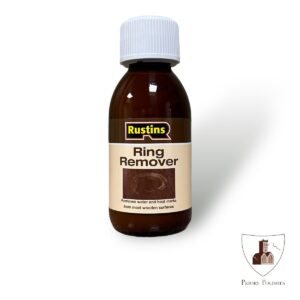
Rustins Ring Remover – 125ml – For Ring, Water & Heat Marks
£6.99 Add to basket -
Antique Furniture Polishing Restoration Kit
£49.99 Select options This product has multiple variants. The options may be chosen on the product page


Philip Shepherd (verified owner) –
Bottle was leaking
Lesley O’Neill (verified owner) –
Works brilliantly.
Colin Lilley (verified owner) –