




Clock Dial Silvering Restoration Kit
£34.95
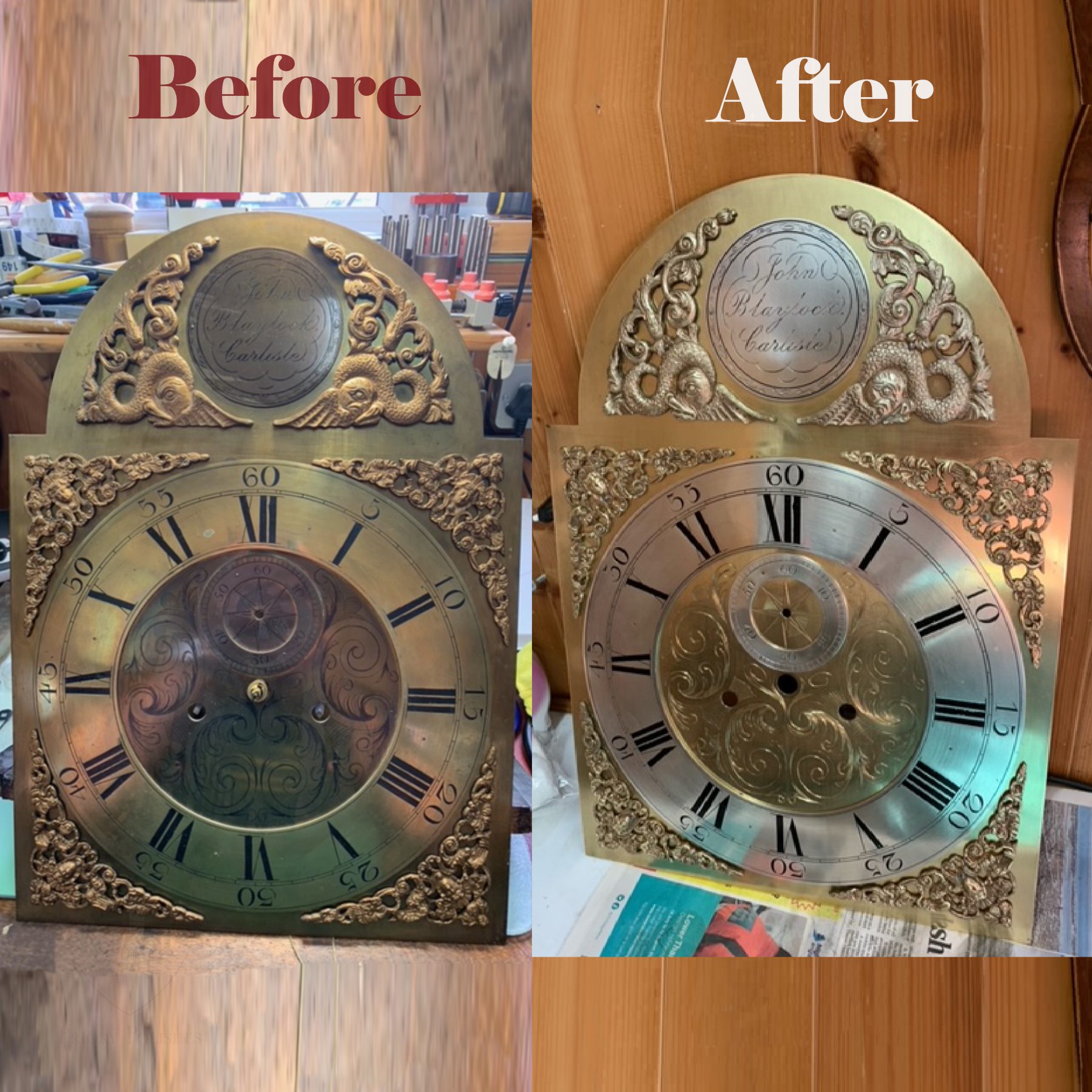
Priory Polishes Clock Dial Silvering Restoration Kit has been specially put together for restoring and re-silvering suitable brass and copper clock dials, clock faces and chapter rings. The kit includes –
- 50g Silvering Powder
- 50g Finishing Powder
- 100ml Silver/Brass Lacquer
- 1 X Black Hard Wax Stick Engravers Wax
- 1 X Black Soft Wax Stick Engravers Wax
UK FREE delivery on all orders over £24
98 in stock
Description
Priory Polishes Clock Dial Silvering Restoration Kit has been specially put together for restoring and re-silvering suitable brass and copper clock dials, clock faces and chapter rings.
The kit contains the main materials required to restore the silvered appearance of an antique clock dial, including silvering powder, finishing powder, silver/brass lacquer and black engravers wax.
It is suitable for clock and barometer dial restoration and is designed for restorers, clockmakers, horologists and anyone undertaking the restoration of a suitable antique clock dial.
The kit combines products that are also available individually, making it a convenient option when carrying out a complete clock dial silvering restoration.
What’s included in the kit?
The Clock Dial Silvering Restoration Kit contains:
- 50g Silvering Powder – for re-silvering suitable brass and copper dials.
- 50g Finishing Powder – used as part of the finishing process after silvering.
- 100ml Silver/Brass Lacquer – for protecting the restored dial.
- 1 Black Hard Wax Stick Engravers Wax – for filling engraved numerals and markings with a traditional black finish.
- 1 Black Soft Wax Stick Engravers Wax – useful for very fine engraved details.
The wax sticks are approximately 1cm x 8cm.
The combination of silvering powder, finishing powder, lacquer and engravers wax provides a practical set of materials for carrying out a complete clock dial restoration.
What is the kit used for?
The Clock Dial Silvering Restoration Kit is designed for restoring the appearance of suitable antique and vintage clock dials where the original silvered finish has become worn, damaged or discoloured.
Typical applications include:
- Antique clock dial restoration
- Re-silvering brass clock dials
- Re-silvering copper clock dials
- Restoring clock faces
- Restoring engraved chapter rings
- Grandfather clock dial restoration
- Barometer dial restoration
- Horological restoration
- Restoring engraved clock numerals
The kit is particularly useful where the original dial has lost its silvered appearance but the underlying brass or copper dial is suitable for re-silvering.
Clock dial silvering process
Successful clock dial silvering depends heavily on careful preparation and cleanliness. The silvering powder works through a chemical reaction with the metal surface, so grease and fingerprints can interfere with the process and result in uneven colouring.
A typical restoration process involves:
- Remove any existing lacquer or unsuitable coating from the dial.
- Thoroughly clean and prepare the brass or copper surface.
- Avoid touching the cleaned surface with bare fingers.
- Restore the engraved numerals and markings using black engravers wax where required.
- Apply the silvering powder.
- Allow the silvering process to develop correctly.
- Apply the finishing powder.
- Thoroughly dry the front and back of the dial.
- Apply the protective lacquer in thin coats.
- Allow the finished dial to dry fully before handling or reassembling the clock.
The exact process and preparation required will depend on the condition and construction of the individual dial.
Cleanliness is critical. Fingerprints or grease left on the metal between cleaning and applying the silvering powder can cause uneven silvering.
Using the silvering powder
The 50g Silvering Powder included in the kit is intended for re-silvering suitable brass and copper clock dials.
The silvering powder works by a chemical reaction with the exposed metal surface. For this reason, the dial must be thoroughly clean and free from grease, fingerprints, lacquer and other coatings.
Do not touch the prepared dial with your bare hands. Even small amounts of grease from fingerprints can affect the reaction and produce uneven colouring.
The silvering powder should not be used on:
- Plated dials
- Lacquered dials
- Aluminium
- Soft solder
The product is intended for use on clean brass or copper dials.
Always test the complete process on a suitable area or spare piece before treating an important original dial.
Using the finishing powder
The 50g Finishing Powder is used after the silvering process as part of the traditional clock dial restoration process.
Once the finishing powder stage has been completed, it is particularly important to ensure that the dial is thoroughly dry.
Some clock dials can retain moisture, particularly around cracks and stress fractures. Remaining moisture can affect the silvering result and may cause patchy colouring or a loss of the silver effect.
After the finishing powder process:
- Dry the front and back of the dial quickly.
- Use separate clean cloths for the front and back.
- Avoid transferring grease or dirt from the rear of the dial onto the silvered surface.
- Warm the dial carefully to ensure that it is thoroughly dry.
A hairdryer can be used to warm the dial carefully. If using any other heat source, take extreme care and keep the dial well away from a naked flame.
Using the black engravers wax
The kit includes both Black Hard Engravers Wax and Black Soft Engravers Wax for restoring engraved numerals and markings.
Black Hard Engravers Wax
The hard wax provides a more traditional and hard-wearing finish, although it is more difficult to work.
When using hard wax, gently warming the workpiece can help the wax attach securely inside the engraved channel. The wax can then be gently melted and worked into the engraving using a metal knife or spatula.
Black Soft Engravers Wax
The soft wax is easier to use and is particularly suitable for very thin or fine engravings.
It is easier to work into small details but is less stable than the hard wax when used in larger or deeper engravings.
For more information about choosing between the two types of wax, see our Black Engravers Wax – Dial Wax product.
Applying the silver/brass lacquer
The kit contains 100ml of Silver/Brass Lacquer to protect the restored dial after silvering.
When applying lacquer to an engraved clock dial, the first coat should be a very quick, light coat. Once the first coat has dried, subsequent coats can be applied more heavily if required.
Particular care is needed on engraved dials because applying too much lacquer can cause the dial wax to melt and run.
A soft cotton cloth or cotton wool pad can be used to apply the lacquer. A quick, light application should be allowed to dry before the surface is touched or another coat is applied.
Keep the lacquer coats particularly thin around engraved areas.
Important information
- Cleanliness is one of the most important factors in successful clock dial silvering. Avoid touching the prepared metal with your fingers between cleaning and applying the silvering powder.
- The silvering powder is designed for clean brass and copper dials. It will not work correctly on plated or lacquered dials and is not suitable for aluminium.
- Do not use silvering powder on soft solder. Silvering powder can react badly with soft solder. Any soft solder must be completely removed before silvering.
- Moisture can also affect the final result. Some dials retain moisture around cracks and stress fractures, so thorough drying of both the front and back of the dial is important after the finishing powder stage.
- When using the included lacquer, apply the first coat very lightly. Excessive lacquer can cause the dial wax to soften and run, particularly around engraved numerals.
- Always test the complete restoration process before working on a valuable or irreplaceable antique dial.
Frequently Asked Questions
What is the Clock Dial Silvering Restoration Kit?
It is a complete set of materials for restoring and re-silvering suitable brass or copper clock dials, clock faces and chapter rings. The kit includes silvering powder, finishing powder, silver/brass lacquer and both hard and soft black engravers wax.
What is included in the Clock Dial Silvering Restoration Kit?
The kit contains 50g silvering powder, 50g finishing powder, 100ml silver/brass lacquer, one black hard engravers wax stick and one black soft engravers wax stick.
Can the kit be used to re-silver a brass clock dial?
Yes. The silvering powder is intended for use on clean, suitable brass clock dials and is designed to restore their traditional silvered appearance.
Can the kit be used on copper clock dials?
Yes. The silvering powder can be used on suitable clean copper dials as well as brass.
Can I use the kit on an aluminium clock dial?
No. The silvering powder is not suitable for aluminium.
Can I use the silvering powder on a plated dial?
No. The silvering powder requires exposed suitable metal and will not work correctly on plated dials.
Can I use the silvering powder on a lacquered dial?
No. Existing lacquer must be removed before the silvering process. The silvering powder needs to react with the exposed brass or copper surface.
Why is cleanliness so important when silvering a clock dial?
The silvering powder works through a chemical reaction with the metal. Grease, oil and fingerprints can prevent the reaction from taking place evenly and can result in patchy silvering.
Can I touch the dial after cleaning it?
It is strongly recommended that you do not touch the prepared surface with bare hands. Fingerprints can leave grease on the metal and affect the silvering result.
Why can a silvered clock dial become patchy overnight?
Some dials can retain moisture, particularly around cracks and stress fractures. If the dial is not thoroughly dried after the finishing powder stage, retained moisture can affect the silvering result and cause patchy colouring.
How can I make sure the dial is completely dry?
After the finishing powder process, carefully dry both the front and back of the dial using separate clean cloths. The dial can then be warmed carefully, for example with a hairdryer, to ensure that cracks and stress fractures are thoroughly dry.
What is the black engravers wax for?
The black engravers wax is used to restore engraved numerals, markings and other recessed details on the clock dial.
What is the difference between the hard and soft engravers wax?
The hard wax provides a more traditional and hard-wearing finish but is more difficult to apply. The soft wax is easier to use and is particularly suitable for very fine engravings, but it is less stable in larger engraved areas.
How do I apply the hard engravers wax?
Gently warm the workpiece if appropriate, then gently melt the hard wax and work it into the engraved channel using a metal knife or spatula. Take care not to overheat the dial.
Can I use the soft engravers wax for fine numerals?
Yes. The soft wax is particularly useful for very thin and fine engraved details because it is easier to work into small channels.
How should I apply the lacquer?
Apply the first coat as a very quick, light coat and allow it to dry. Further coats can then be applied more heavily if required. Keep lacquer particularly thin over engraved areas because excessive lacquer can cause the dial wax to melt and run.
Can I use the kit for barometer dials?
Yes. The kit has been designed for clock and barometer dial restoration where the underlying metal is suitable for the silvering process.
Is this kit suitable for beginners?
The kit provides the materials needed for the restoration, but clock dial silvering is a specialist restoration process. We recommend carefully following the instructions, watching the silvering demonstration and practising on a suitable spare or less valuable dial before attempting an important antique dial.
Can I buy the silvering powder separately?
Yes. Priory Polishes also supplies Antique Clock Dial Silvering Powder & Finishing Powder separately in 50g and 100g sizes.
Can I buy the engravers wax separately?
Yes. Black Engravers Wax is also available separately in hard and soft formulations.
Important:
- Always test the complete process before treating an original or valuable clock dial. Silvering powder should only be used on suitable clean brass or copper surfaces, and appropriate care should be taken when handling the lacquer, wax and other restoration materials.
- This cellulose based lacquer is fine to use on clock dials as long as the first coat is a very quick, light coat. It can then be applied heavier/thicker after the first coat has dried. The lacquer should only be applied thinly to engraved dials. Dial wax will melt and run if too much lacquer is used. A soft cotton cloth or cotton wool pad can be used; a quick swipe is the usual method then leave to dry before touching or attempting to add more lacquer.
- Cleanliness is of paramount importance when silvering and almost all problems encountered are due to finger marks on the metal between cleaning and applying the powder. Silvering powder acts by chemical reaction with the metal, and if this cannot take place evenly, an uneven colouring occurs. This powder will not work on plated or lacquered dials. It will not work on aluminium. Use only on clean brass or copper Dials.
- We find that on some certain dials, they hold a lot more moisture than others. This can affect the silvering process overnight, making the brass patchy or loosing the silver effect on your dial. To resolve this, after the finishing powder process, dry quickly the front and back without spreading any grease or dirt from the back, so use different cloths. Then warm the dial quickly to ensure thorough dryness, either by hairdryer or well above a naked flame. This will ensure the cracks and stress fractures are totally dry. This will usually resolve the problem.
Safety Data Sheets
Additional information
| Weight | 0.6 kg |
|---|
8 reviews for Clock Dial Silvering Restoration Kit
You may also like…
-

Black Engravers Wax – Dial Wax
Price range: £5.99 through £6.99 Select options This product has multiple variants. The options may be chosen on the product page -
No 1 – Ammoniated Clock Cleaning Concentrate Solution
Price range: £11.95 through £90.00 Select options This product has multiple variants. The options may be chosen on the product page -
Priory Polishes Clock Case Restorer
Price range: £12.95 through £129.00 Select options This product has multiple variants. The options may be chosen on the product page -
Antique Clock Dial Silvering Powder & Finishing Powder
Price range: £15.95 through £23.95 Select options This product has multiple variants. The options may be chosen on the product page


Related products
-
Horofinish Finishing Powder
Price range: £12.95 through £20.95 Select options This product has multiple variants. The options may be chosen on the product page -
Horolene Concentrate — Premium Clock & Brass Cleaner
Price range: £19.98 through £145.86 Select options This product has multiple variants. The options may be chosen on the product page -
Horotech Rinse
Price range: £18.95 through £64.95 Select options This product has multiple variants. The options may be chosen on the product page


Perry Clayton (verified owner) –
Great product, very professional service. Many thanks.
CHRISTOPHER DODD (verified owner) –
The re silvering stuff didn’t cost an excessive price and it arrived by post fast enough. It’s simple to use but i can see the reason to follow the instructions and a video on u tube closely. CLEANLINESS is the trick. Perfectly clean without greasy finger prints and it’s a very smart result.
edward crocombe (verified owner) –
Good seller
Terry Jones (verified owner) –
Reasonable priced, really fast service. Product worked well producing a good result.
I did email to ask a question and received a reply within 24 hours.
Not my first purchase from Priory, all have been a good experience, I can highly recommend.
Thank you 😀
David B. (verified owner) –
V happy with transaction. Products worked a treat on antique grandfather clock face.
Tony Everson-Davis (verified owner) –
The silvering of a clock dial went really well with a very good finish.
Robert Holland (verified owner) –
works well.
Richard POWELL (verified owner) –
Just what I needed to restore my grandfather clock, saving a the huge cost of using a professional restorer.