



Antique Clock Dial Silvering Powder & Finishing Powder
Price range: £15.95 through £23.95
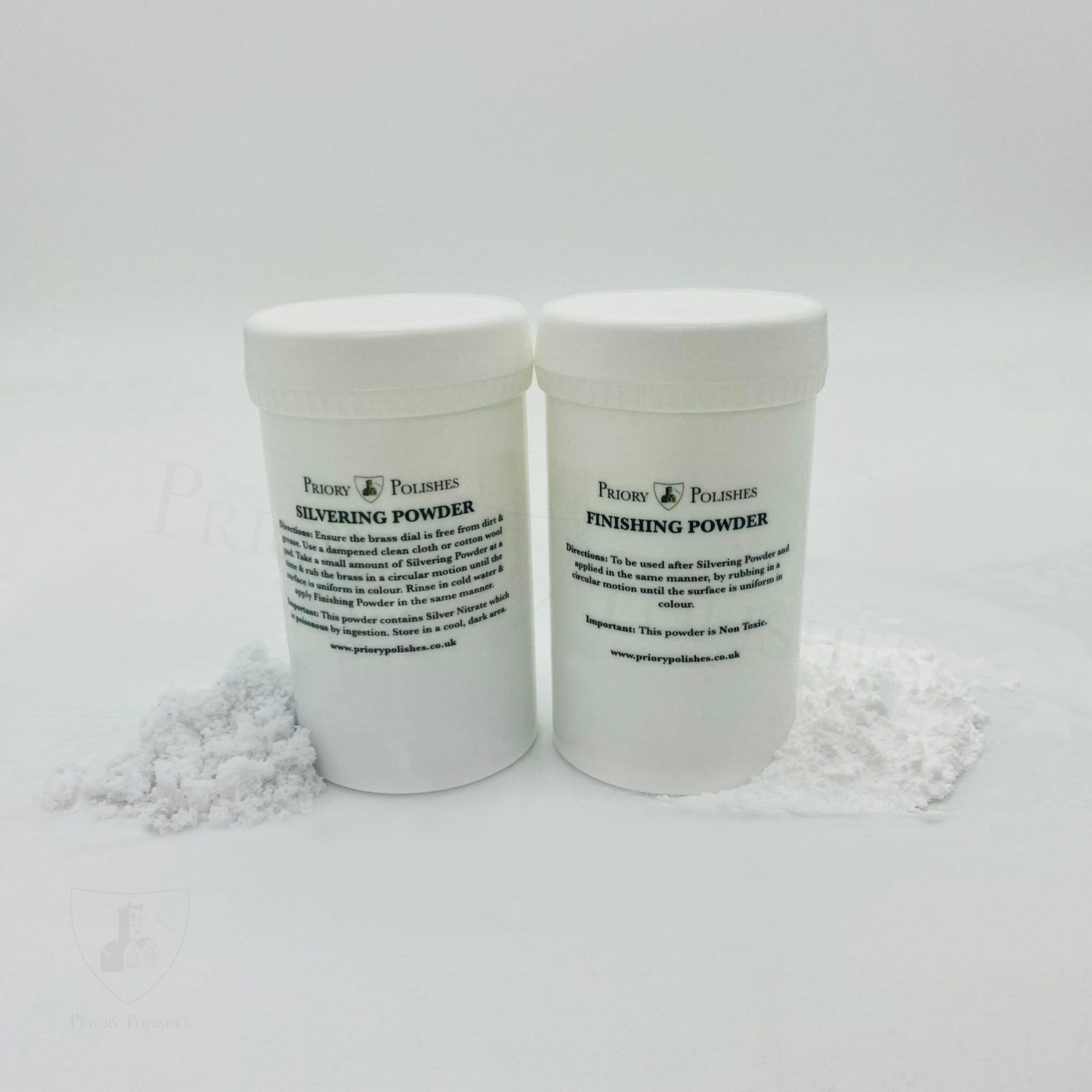
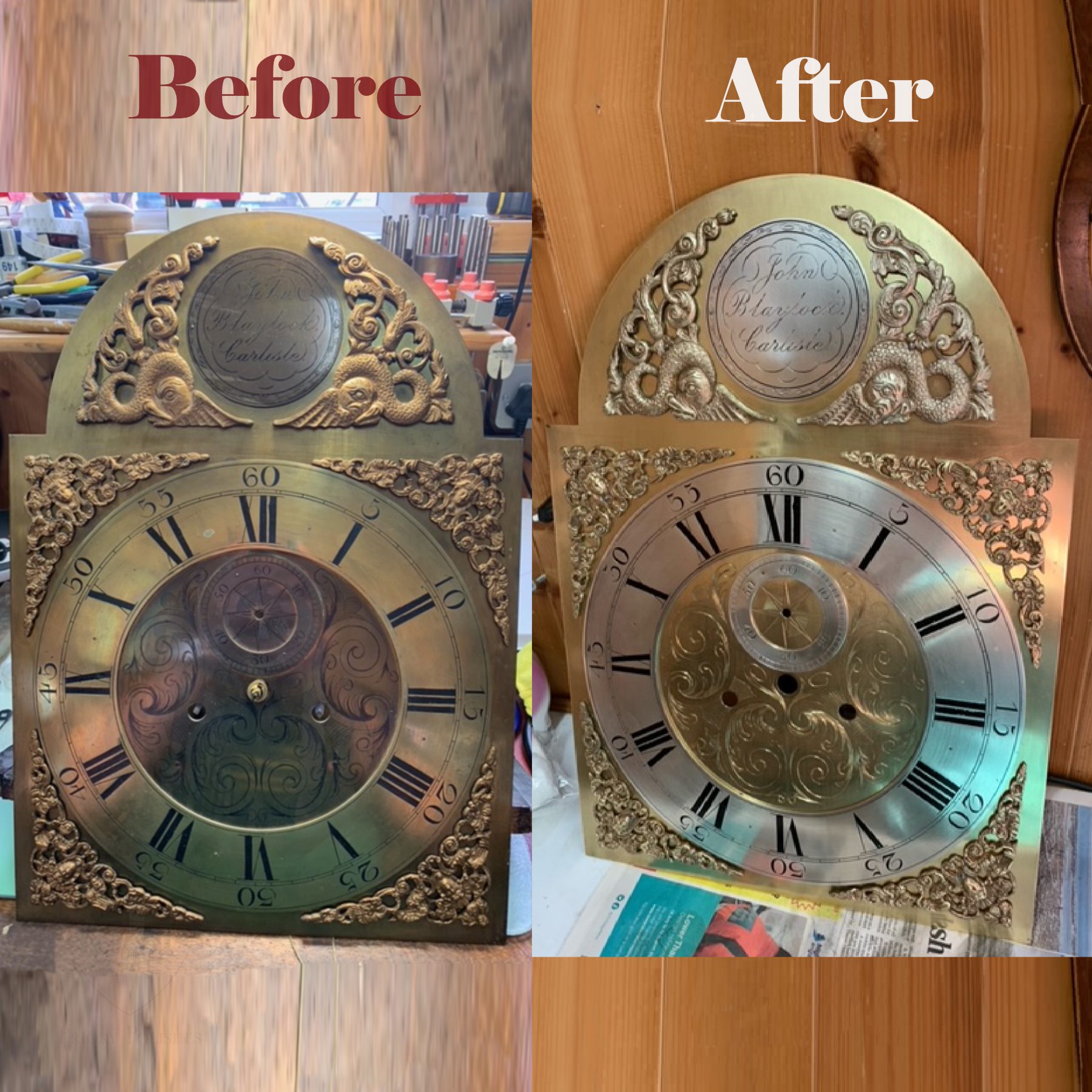
Priory Polishes Antique Clock Dial Silvering Powder & Finishing Powder is a traditional silvering system for restoring the appearance of suitable brass and copper clock dials.
- For re-silvering suitable brass and copper clock dials, clock faces and chapter rings.
- This Clock Dial silvering powder is made to an age old recipe
- Used by clock restorers and the horological trade for many years
- Available in 50g and 100g sizes.
UK FREE delivery on all orders over £24
Description
Antique Clock Dial Silvering Powder & Finishing Powder is a traditional silvering system for restoring the appearance of suitable brass and copper clock dials.
Priory Polishes has supplied clock dial silvering powder to the horological trade and clock restorers for many years. The powder is made to a traditional recipe and is intended to reproduce the type of silvered finish associated with antique and traditional clock dials.
It can be used for re-silvering suitable brass clock dials, copper dials, clock faces and chapter rings.
The silvering powder works through a chemical reaction with the exposed metal surface. Careful preparation and cleanliness are therefore essential for achieving an even finish.
Available in 50g and 100g sizes.
- What is Clock Dial Silvering Powder used for?
- What is included?
- How to re-silver a clock dial
- Preparing the clock dial
- Using Black Engravers Wax
- Applying the Silvering Powder
- Using the Finishing Powder
- Drying the silvered dial
- Protecting the finished dial
- Important information
- Frequently Asked Questions
What is Clock Dial Silvering Powder used for?
Clock Dial Silvering Powder is used to restore the silvered appearance of suitable antique and vintage clock dials where the original silvering has become worn, damaged or discoloured.
Typical applications include:
- Antique clock dial restoration
- Re-silvering brass clock dials
- Re-silvering copper clock dials
- Clock face restoration
- Chapter ring restoration
- Grandfather clock dial restoration
- Barometer dial restoration
- Horological restoration
- Restoring engraved clock numerals
The powder is particularly useful when the underlying dial is clean, suitable brass or copper and the original silvered surface needs to be restored.
What is included?
This product contains both the materials required for the traditional silvering and finishing stages:
- Silvering Powder – used to create the silvered appearance on suitable brass or copper.
- Finishing Powder – used after the silvering stage to develop and finish the restored surface.
The product is available in 50g and 100g sizes.
If you are carrying out a complete clock dial restoration and also require lacquer and black engravers wax, our Clock Dial Silvering Restoration Kit contains the silvering powder, finishing powder, Silver/Brass Lacquer and both hard and soft Black Engravers Wax.
How to re-silver a clock dial
Successful clock dial silvering depends on thorough preparation and careful handling. The dial should be clean, free from grease and suitable for the silvering process before the powder is applied.
The general restoration process is:
- Remove the old silvered finish and prepare the underlying brass or copper.
- Create the required surface finish, including a spun effect if appropriate.
- Restore the engraved numerals using Black Engravers Wax.
- Make sure the dial surface is level and completely clean.
- Apply the Silvering Powder to the dampened surface.
- Work the powder evenly over the dial.
- Rinse thoroughly.
- Apply the Finishing Powder.
- Rinse again to remove all remaining finishing powder.
- Dry the dial thoroughly.
- Apply a suitable clear Silver/Brass Lacquer if required.
The condition and construction of the individual dial will determine exactly how much preparation is required before silvering.
Preparing the clock dial
Before applying the silvering powder, the old finish and damaged silver should be removed so that clean brass or copper is exposed.
Use suitable fine abrasive paper or very fine steel wool to clean the dial back to the underlying metal.
For a traditional spun brass dial effect, the dial can be rotated around a fixed point while fine emery paper is held against the surface. This creates the circular grain commonly associated with many traditional clock dials.
Once the surface has been prepared, rinse the dial thoroughly and make sure it is free from grease and other contamination.
Do not touch the prepared metal with your bare fingers. Fingerprints are one of the most common causes of uneven silvering.
Using Black Engravers Wax
Engraved clock dials often require the numerals to be restored before the silvering process.
Black Engravers Wax can be used to fill the recessed numerals and markings. If the original wax is cracked but still present, gently warming the dial can allow the cracks in the existing wax to close.
If the wax is missing or insufficient, small flakes of Black Engravers Wax can be added to the engraved numerals and gently warmed.
Once the wax has cooled, any excess can be carefully levelled so that the surface is flush with the surrounding dial.
Our Black Engravers Wax – Dial Wax is available separately in both hard and soft formulations.
Applying the Silvering Powder
Once the dial has been properly prepared, the silvering powder can be applied.
- Lightly dampen a clean piece of cotton wool.
- Apply the Silvering Powder to the damp cotton wool.
- Work the powder into the dial in a circular motion.
- Work on the surface a small section at a time.
- Keep the cotton wool damp throughout the application.
- Continue until the desired silver colour develops across the dial.
The silvering process works through a chemical reaction with the exposed metal. As the powder is worked into the surface, the silvered appearance will begin to develop.
Do not rush the process. Work methodically across the entire dial to help achieve an even result.
Using the Finishing Powder
Once the desired silver colour has been achieved, the Finishing Powder is applied.
Use damp cotton wool and work the finishing powder over the surface in the direction of the dial grain.
Once the finishing process is complete, rinse the dial thoroughly to remove all remaining finishing powder.
It is important that no finishing powder residue remains on the surface before the dial is dried and protected.
Drying the silvered dial
Thorough drying is extremely important.
Some clock dials can retain moisture, particularly around cracks, stress fractures and engraved areas. Remaining moisture can affect the silvering overnight and may result in the brass becoming patchy or the silver effect being lost.
After the finishing powder stage:
- Dry the front of the dial quickly.
- Dry the back of the dial separately.
- Use different clean cloths for the front and back.
- Take care not to transfer grease or dirt from the rear of the dial onto the silvered surface.
- Warm the dial carefully to ensure that cracks and stress fractures are completely dry.
A hairdryer can be used to warm the dial carefully. If using another heat source, keep the dial well away from a naked flame and take appropriate precautions.
Protecting the finished dial
Once the dial is completely dry, a clear Silver/Brass Lacquer can be applied to protect the restored surface and help reduce subsequent oxidation.
For engraved clock dials, the first coat should be particularly light.
Apply a quick, thin coat using a soft cotton cloth or cotton wool pad and allow it to dry before applying further lacquer.
Do not apply excessive lacquer to engraved dials. Too much lacquer can cause the dial wax to melt and run.
Our Silver/Brass Lacquer is available separately if additional lacquer is required.
Important information
- Cleanliness is critical when silvering a clock dial. Fingerprints, grease and other contamination can interfere with the chemical reaction between the powder and the metal and result in uneven colouring.
- This silvering powder is designed for clean brass or copper dials.
- It will not work correctly on plated or lacquered dials and is not suitable for aluminium.
- Do not use silvering powder on solder. The powder can react badly with soft solder. Any soft solder present must be completely removed before attempting to silver the dial.
- Some twentieth-century clock manufacturers copper-plated brass dials before silvering. When restoring these dials, the copper layer can sometimes produce a slight colour difference or patchiness if the copper becomes exposed during preparation.
- The powder is light sensitive and should be stored in a dark, cool and dry place. When stored correctly, the stated shelf life is approximately 2–6 years.
- Always test the complete restoration process before treating a valuable or irreplaceable antique dial.
- We find that on some certain dials, they hold a lot more moisture than others. This can affect the silvering process overnight, making the brass patchy or loosing the silver effect on your dial. To resolve this, after the finishing powder process, dry quickly the front and back without spreading any grease or dirt from the back, so use different cloths. Then warm the dial quickly to ensure thorough dryness, either by hairdryer or well above a naked flame. This will ensure the cracks and stress fractures are totally dry. This will usually resolve the problem.
- For a full Clock Dial restoration, please see also see our Clock Dial Silvering Restoration Kit
Frequently Asked Questions
What is Clock Dial Silvering Powder?
Clock Dial Silvering Powder is a traditional restoration product used to restore the silvered appearance of suitable brass and copper clock dials, clock faces and chapter rings.
What is the difference between Silvering Powder and Finishing Powder?
The Silvering Powder creates the silvered finish through a chemical reaction with the prepared metal. The Finishing Powder is then used as part of the finishing process to help develop and complete the restored surface.
Can I re-silver a brass clock dial?
Yes. The product is specifically intended for re-silvering suitable clean brass clock dials.
Can I use the powder on a copper dial?
Yes. The powder can be used on suitable clean copper dials as well as brass.
Will the silvering powder work on an aluminium dial?
No. The product is not suitable for aluminium.
Will the silvering powder work on a plated clock dial?
No. The powder is designed to react with clean exposed brass or copper. Existing plating needs to be removed before attempting to silver the underlying suitable metal.
Can I use it on a lacquered clock dial?
No. Existing lacquer must be removed before silvering because the powder needs to react directly with the exposed metal.
Can I use silvering powder over solder?
No. Silvering powder can react badly with soft solder. All soft solder should be completely removed before silvering.
Why does my silvered clock dial become patchy?
One of the most common causes is contamination from fingerprints, grease or dirt between cleaning the metal and applying the silvering powder. Moisture retained in cracks and stress fractures can also affect the result.
Why does the silver effect disappear overnight?
Some dials retain moisture after the finishing process. If moisture remains in cracks or stress fractures, it can affect the silvering overnight. Thoroughly drying both sides of the dial and carefully warming it can help prevent this problem.
How do I stop fingerprints affecting the silvering?
Once the dial has been thoroughly cleaned, avoid touching the prepared surface with bare hands. Use clean gloves or handle the dial only by areas that will not be silvered.
How do I create a spun effect on a clock dial?
A spun effect can be created by placing a nail in a piece of old board and rotating the dial around it while holding fine emery paper against the surface. This produces the circular grain associated with many traditional spun clock dials.
How do I restore the black numerals before silvering?
Use Black Engravers Wax to fill the recessed numerals and markings. If the original wax is cracked, gently warming it can help close the cracks. Missing areas can be filled with additional wax and then levelled once cool.
How do I apply the silvering powder?
Apply the powder to slightly dampened cotton wool and work it into the clean metal in a circular motion. Work across the dial in small sections while keeping the cotton wool damp.
How do I use the finishing powder?
After achieving the desired silver colour, apply the Finishing Powder with damp cotton wool, working in the direction of the dial grain. Rinse thoroughly afterwards to remove all remaining powder.
How important is drying after silvering?
It is extremely important. Moisture left in cracks, stress fractures or other areas of the dial can affect the silvering result overnight. Dry both sides thoroughly and warm the dial carefully to ensure that it is completely dry.
Should I lacquer a newly silvered clock dial?
A clear Silver/Brass Lacquer can be applied once the dial is completely dry to protect the restored finish and reduce oxidation. Lacquer is optional, but can provide useful protection.
How much lacquer should I use on an engraved dial?
Use a very light first coat. Excessive lacquer can cause the Black Engravers Wax to melt and run. A quick swipe with a soft cotton cloth or cotton wool pad is normally sufficient for the first coat.
How long does Clock Dial Silvering Powder last?
The powder is light sensitive. When stored correctly in a cool, dry and dark place, the stated shelf life is approximately 2–6 years if unopened.
What sizes are available?
Antique Clock Dial Silvering Powder & Finishing Powder is available in 50g and 100g sizes.
Is this suitable for restoring a grandfather clock dial?
Yes, provided the dial is made from suitable clean brass or copper and does not have an unsuitable plated or lacquered surface. The product is used by clock restorers for antique clock dial and chapter ring restoration.
Is this suitable for barometer dials?
Yes. Suitable brass and copper barometer dials can also be restored using the traditional silvering process.
Do I need anything else to re-silver a clock dial?
The silvering and finishing powders provide the main silvering materials. Depending on the condition of the dial, you may also need Black Engravers Wax, suitable abrasives and Silver/Brass Lacquer to complete the restoration.
For convenience, our Clock Dial Silvering Restoration Kit contains the main materials required for a complete restoration, including silvering powder, finishing powder, lacquer and both hard and soft Black Engravers Wax.
Why after 24 hours is the dial yellowing? I’ve tried applying renaissance wax, leaving it bare, drying it between finishing powder & wax.
This is not due to lacquer or the wax as it is happening too quickly. The two most likely causes are either the surface of the brass or waxed numerals has grease or contamination in it, where tiny blowholes or wax cracking contains impurities, or the Silvering is not taking sufficiently enough. The first is corrected by scrubbing the surface with a de-greaser like benzine or lighter fuel and then redoing it. The second is make sure the dial is wet enough when silvering. Silvering takes better on a wet dial.
Safety Data Sheets
Additional information
| Weight | N/A |
|---|---|
| size | 50g, 100g |
13 reviews for Antique Clock Dial Silvering Powder & Finishing Powder
You may also like…
-

Clock Dial Silvering Restoration Kit
£34.95 Add to basket -
Antique Furniture Polishing Restoration Kit
£49.99 Select options This product has multiple variants. The options may be chosen on the product page -
Clock Restoration Kit
£52.99 Select options This product has multiple variants. The options may be chosen on the product page -
Priory Polishes Clock Case Restorer – 150ml
£12.95 Add to basket


Related products
-
Priory Polishes Slate Blacking – Black Slate Restorer
Price range: £14.95 through £34.95 Select options This product has multiple variants. The options may be chosen on the product page -
Priory Polishes Shellac French Polish – 1 Litre
£29.99 Add to basket -
Antiquax Original Wax Polish – 500ml
£16.99 Add to basket

Niall Archer (verified owner) –
simon coope (verified owner) –
Great product and so much cheaper than other makers.
Richard (verified owner) –
Good service and product. Thanks.
Russell Taylor (verified owner) –
I have used this product before and it never fails.
TERRY (verified owner) –
All good, worked reasonably well. Make sure you do a test run on a sample first.
Roy R. (verified owner) –
WOW,, it works. Just to practice I wire wool cleaned a piece of copper pipe.
After only a minute of applying the Silverering Power I was surprised how quickly the silvering showed up.
I do like to experiment so applied Finish Powder to only half of the silvered test.
DO NOT TRY THIS!!! The unfinished part tarnished within a couple of hours.
Charles Matcham (verified owner) –
kevin egner (verified owner) –
Michael Henderson (verified owner) –
Fast efficient service
Tanya (verified owner) –
Fast delivery, great product 1st time I’ve repaired a clock face easy to use great result. Thank you for your service! 😊
Ronald Dadswell (verified owner) –
Very pleased with my first attempt at silvering a chapter ring so with more confidence re-silvered the chapter ring, second hand dial and name medallion on another of my clocks. Both clocks look great.
Richard (verified owner) –
Excellent product promptly delivered
Frank Craig (verified owner) –
On time as usual